
Stapeliads
Edithcolea grandis
€5,16 ● In stock
Quick plant info
- Hardiness
- USDA zones – . Prefers warm temperatures between 60°F and 85°F (15°C to 29°C). Cannot tolerate frost or prolonged temperatures below 40°F (4°C)
About this plant
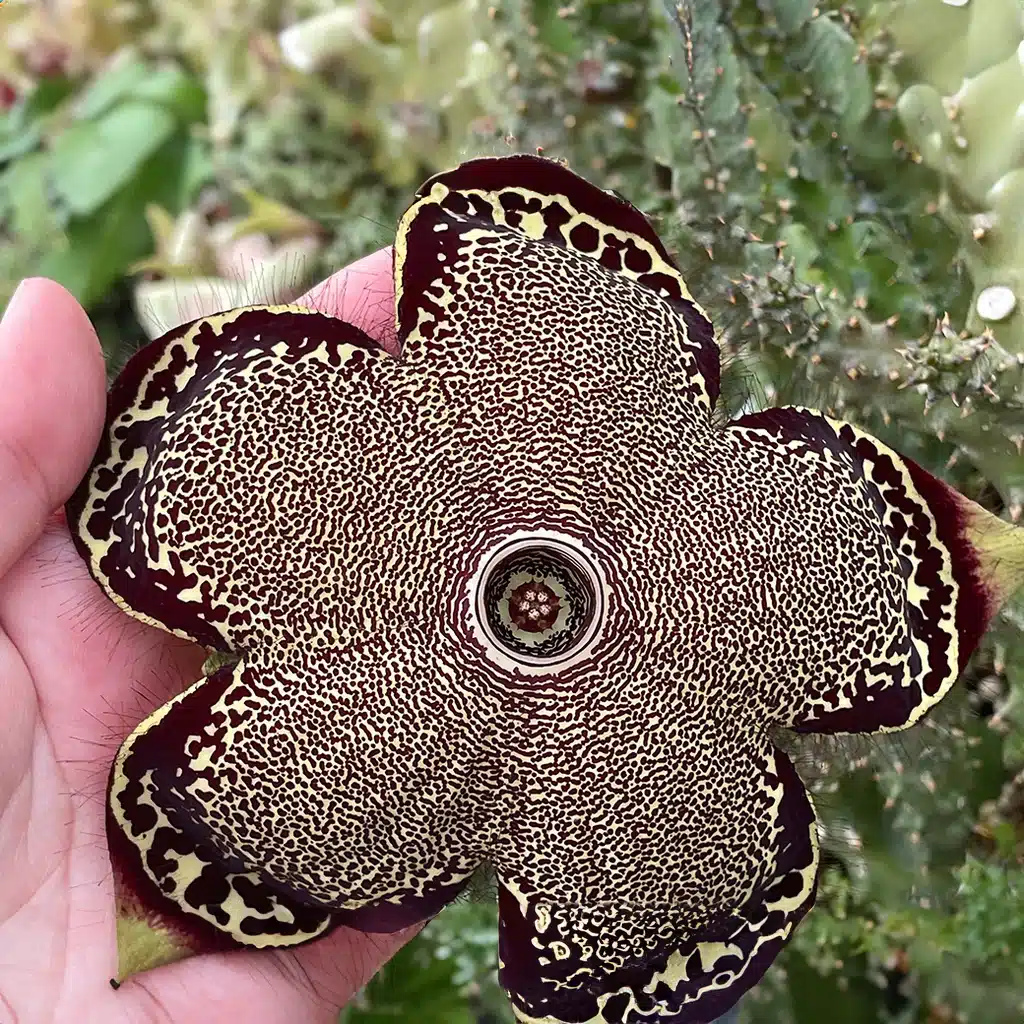
Edithcolea grandis, often referred to as the Persian carpet flower due to its remarkable and vividly patterned blooms, is a standout in the Stapelioid group. This leafless, richly branched perennial succulent forms large ground cushions, making it a striking addition to any succulent collection. While it requires specific growing conditions, including abundant light and higher winter temperatures above 59°F (15°C), Edithcolea grandis rewards with its exceptional and ornate flowers. It’s an ideal choice for enthusiasts looking to add an exotic and visually compelling specimen to their garden or indoor plant display.
We sell all Stapeliads as unrooted cuttings – a bunch of 3 stems, each around 4 inches (10 cm) long.
General Care for Stapeliads
Stapeliads are a unique group of succulent plants known for their striking flowers and interesting forms. They belong to the Apocynaceae family and are mostly native to Africa, with some species found in Asia and the Middle East. Here’s a general guide to caring for Stapeliads:
- Lighting: Stapeliads thrive in bright, indirect light. Direct sunlight can be harmful, especially during the hottest parts of the day. A partially shaded spot is ideal.
- Watering: These plants require moderate watering. Allow the soil to completely dry out between waterings. Over-watering can lead to root rot, so it’s essential to ensure good drainage.
- Soil: Use a well-draining cactus or succulent mix. Stapeliads prefer a soil mix that allows for good air circulation around the roots.
- Temperature: Most Stapeliads prefer warm temperatures and are not tolerant of frost. Keep them in temperatures above 6-8°C (43-46°F).
- Humidity: Stapeliads generally do well in average room humidity. However, during the growing season, a slight increase in humidity can promote healthier growth.
- Fertilization: Feed sparingly during the growing season. Use a balanced, water-soluble fertilizer at half strength.
- Propagation: Propagation can be done through stem cuttings or seeds. Allow cuttings to dry before planting.
- Pests and Diseases: Watch out for pests like mealybugs and take precautions against snails and slugs. Stapeliads are generally resistant to diseases if well taken care of.
Full plant details
- Scientific name
- Edithcolea grandis
- Common names
- Persian Carpet Flowers, Starfish Flowers, Carrion Flowers
- Natural habitat
- Edithcolea grandis is found throughout the African Great Lakes region (Kenya, Tanzania, Uganda), the Horn of Africa (Ethiopia, Somalia, Djibouti), and Yemen, including the Socotra archipelago. It typically grows in dry and arid regions, often partly shaded by rocks and shrubby vegetation, at altitudes ranging from 200 to 1500 meters (650 to 5000 feet) above sea level
- Flowers
- The flowers of Edithcolea grandis are bisexual, measuring 3-5 inches (8-13 cm) in diameter. They have a short tube about 0.2 inches (5 mm) in diameter and 0.12-0.16 inches (3-4 mm) deep. The corolla is 5-lobed, rotate or saucer-shaped, whitish or pale yellowish with a purple-reddish pattern of spots, and the lobes are 1.6-2 inches (4-5 cm) long and 1-1.2 inches (2.5-3 cm) broad. The back of the flower is yellow to green. The flowers have a carrion-like smell to attract pollinators
- Hardiness
- USDA zones – . Prefers warm temperatures between 60°F and 85°F (15°C to 29°C). Cannot tolerate frost or prolonged temperatures below 40°F (4°C)
How to grow it
Practical indoor growing guides from our own experience:
Shipping & guarantee
Plants travel with the soil removed and the roots wrapped in damp sterile coconut peat, then packed in a sturdy box with the shipping option you choose at checkout.
We ship internationally all year round with a Live Arrival Guarantee on live plants. Shipping cost depends on the total weight of your order and the destination.
Same group
You may also like


