How to avoid fungus gnats in your newly potted plants
2 August 2017 · 2 min read · by Alex Mielnikau · updated 31 May 2023

Whenever you are using organically rich soil for potting or repotting, in most cases just a few days later you will see myriads of small flies crawling in your pots and flying around. Those are fungus gnuts and are very easy way to avoid.
Whenever you are using organically rich soil for potting or repotting, in most cases just a few days later you will see myriads of small flies crawling in your pots and flying around. Those are fungus gnuts and are very easy way to avoid.
I often get this question from people watching my videos: why do you have sand in your pots, do you grow in sand? The answer is NO. I don’t grow in it, but I like adding a 2-3cm (1 in) layer of sand box sand on top of my pots. The main reason – you will not get those flies!
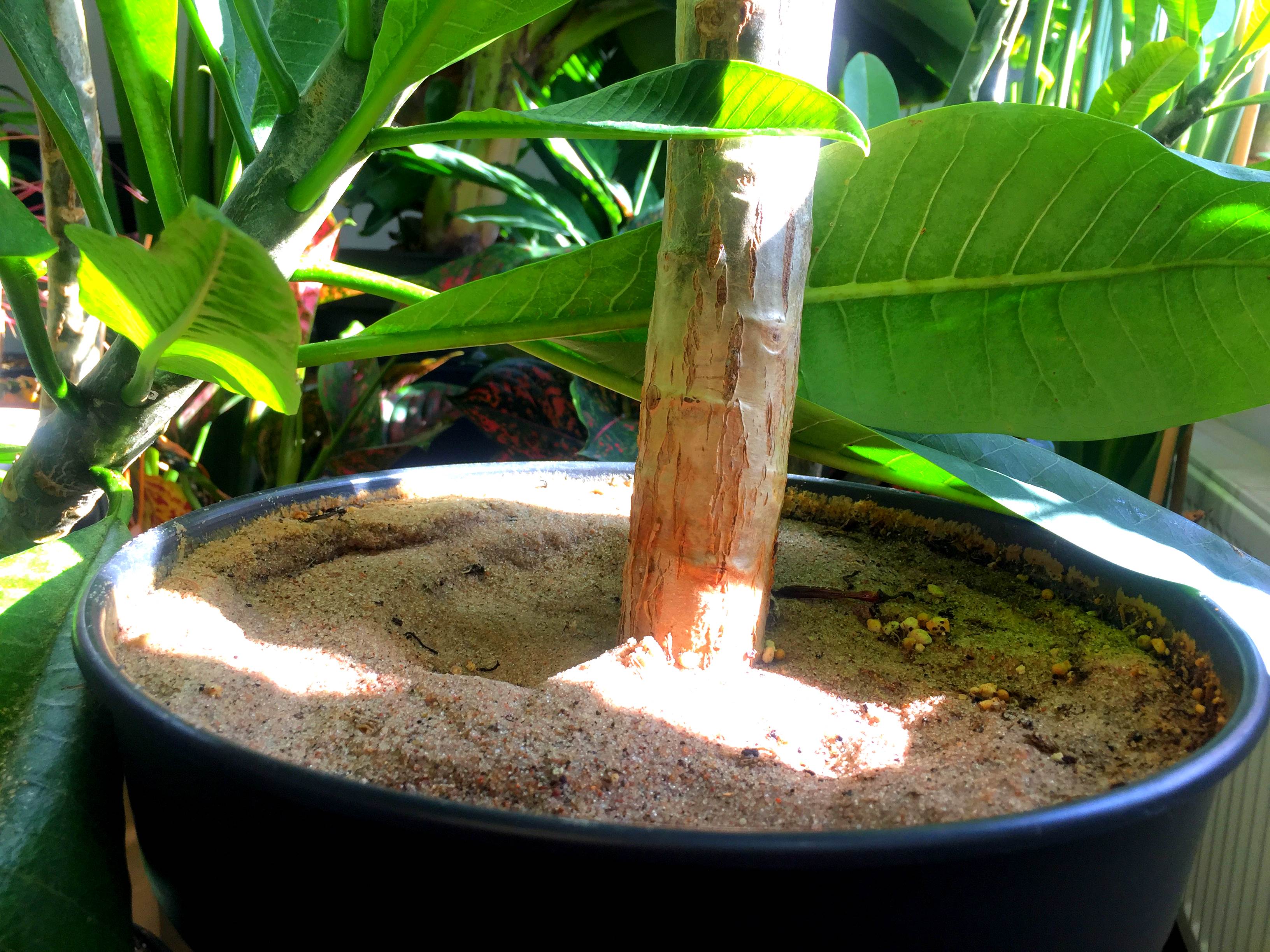
To get to know the subject the flies in your pots are fungus gnats. It can be different species with Latin name Bradysia in Sciaridae family. Many people think they are fruit flies (Drosophilidae family), but they are not the same. Fungus gnats lay their eggs and hatch in soil.
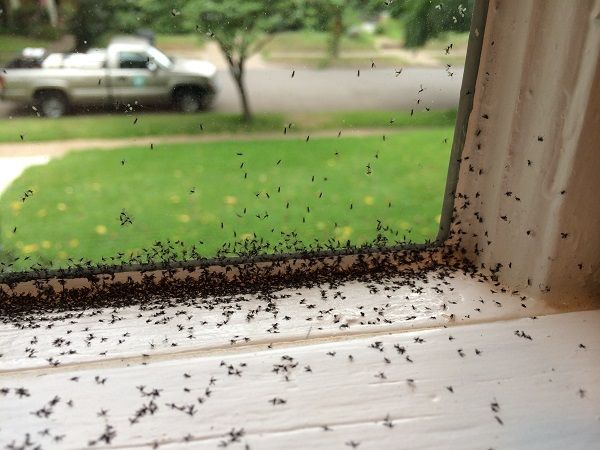 The adult fungus gnats are not much more than an annoyance. Attracted to the CO2 (carbon dioxide), which we breath out, they will fly toward you every time you want to check on your plants. In rare cases the infestation can get as bad as on the photo to the right.
Fungus gnats larvae, however, can do some damage as they are feeding on organic matter in the soil, but also on root hairs of your plants. They can even tunnel into cuttings’ base. So, just sand them over :)
In some extension the sand layer can even prevent other pests also hatching in soil. The sand layer is even a good indicator for watering. Most plants have to be watered when the upper soil getting slightly dry (like most of my tropical plants). Just by touching the sand you can easily tell when it’s dry and it’s time to water.
In addition, the sand layer gives a good support for cuttings and it simply looks better (if you ask me) in pots comparing to soil. I mean sand, beaches and tropics have some persistent connections in our brains.
Grow it yourself
Plants seen in this article — plus 220 more tropicals — are in the shop.


